Fire Ban During Camping Season? Solution: Propane
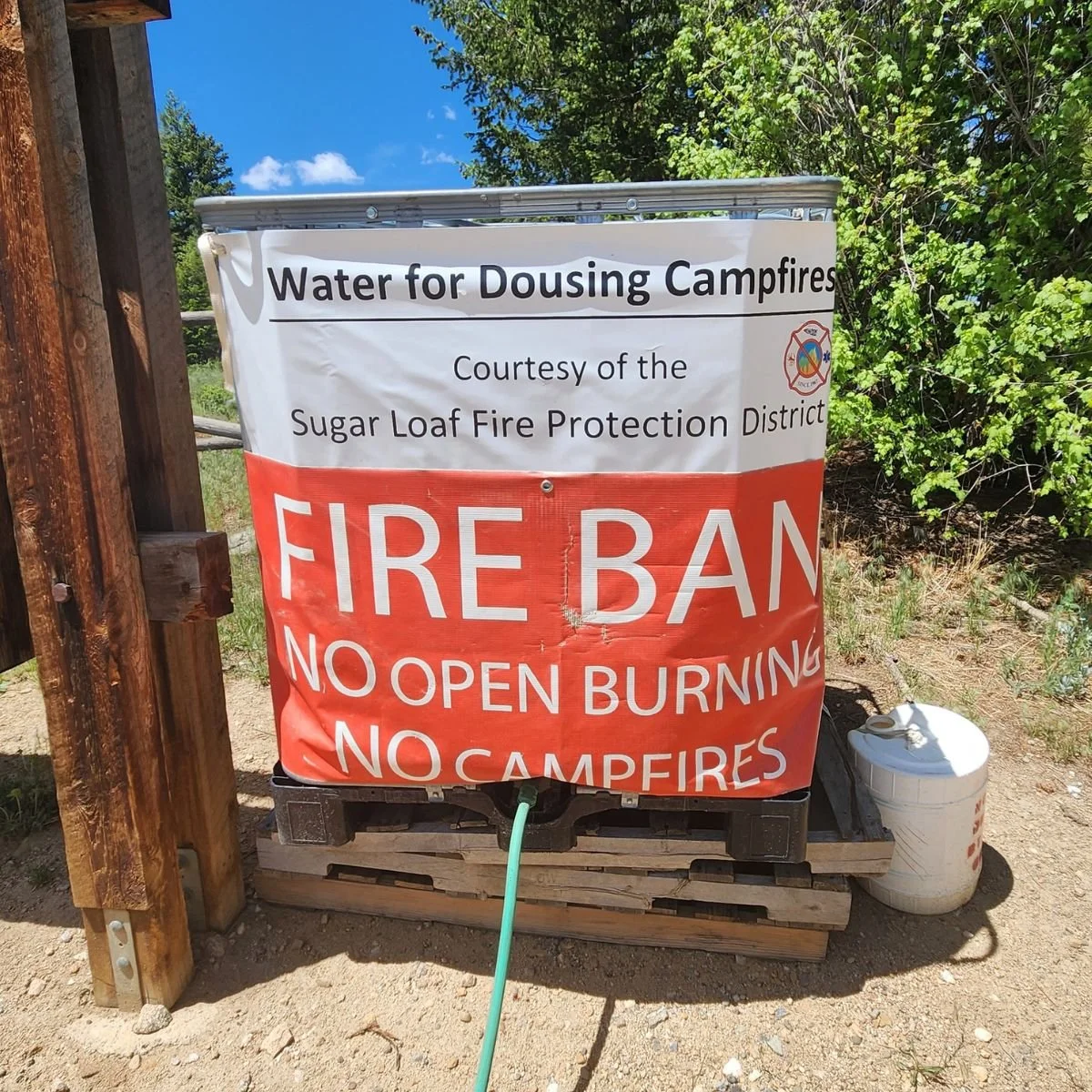
There's something about a campfire that no other experience can replicate. We all know the feeling. The crackle of sap. The smell of smoke. The way the flames pull your eyes in and everything else becomes a blur.
Campfires bring together groups, circling the fire for warmth. But fires create more than warmth, they create a space for authentic connection. Cooking over a fire, sharing stories, and singing songs are fundamental to human relationships.
The reality in 2026: a campfire is a lot harder to light legally and in many places, not allowed at all. But luckily there is a simple solution.
Here's what you need to know, why it matters, and how to keep the heart of camping alive even when the fire ban sign is up.
The Reality of Fire Bans in 2026
For those of us in Colorado, we saw an astonishingly low-moisture winter in 2025–2026. Snowpack across much of the state came in dramatically below normal, soils dried out months earlier than typical, and fire danger across the state is elevated beyond historical averages.
And when fire danger rises, fire restrictions follow. Fast.
What Are Fire Restrictions, Exactly?
According to the National Interagency Fire Center, nearly 88% of wildfires are human caused and can be prevented. Fire restrictions in the U.S. come in two active stages plus a closure stage. The Rocky Mountain Area Coordinating Group publishes the official explanation with additional information regarding fireworks, smoking, chainsaws and other activities.
Here’s what you need to know for campfires:
Stage I occurs when fire danger is increasing. You may only build a campfire in a developed recreation site with established fire rings.
Stage II is the escalation. You may not build a campfire even in developed campgrounds.
Stage III the land is simply closed. No entry permitted except by written authorization.
The key exemption that matters for campers across all stages: portable stoves and grills fueled by propane (liquid petroleum or LPG) are permitted. Even under Stage II, your camp stove is legal. Your campfire is not.
Violations are not trivial. Violations of federal fire restrictions can result in fines of up to $5,000 for an individual and up to $10,000 for an organization, plus up to six months imprisonment.
The Easiest Solution
COLORADO PROPANE FIRE PIT RENTALS | TITUS ADVENTURES
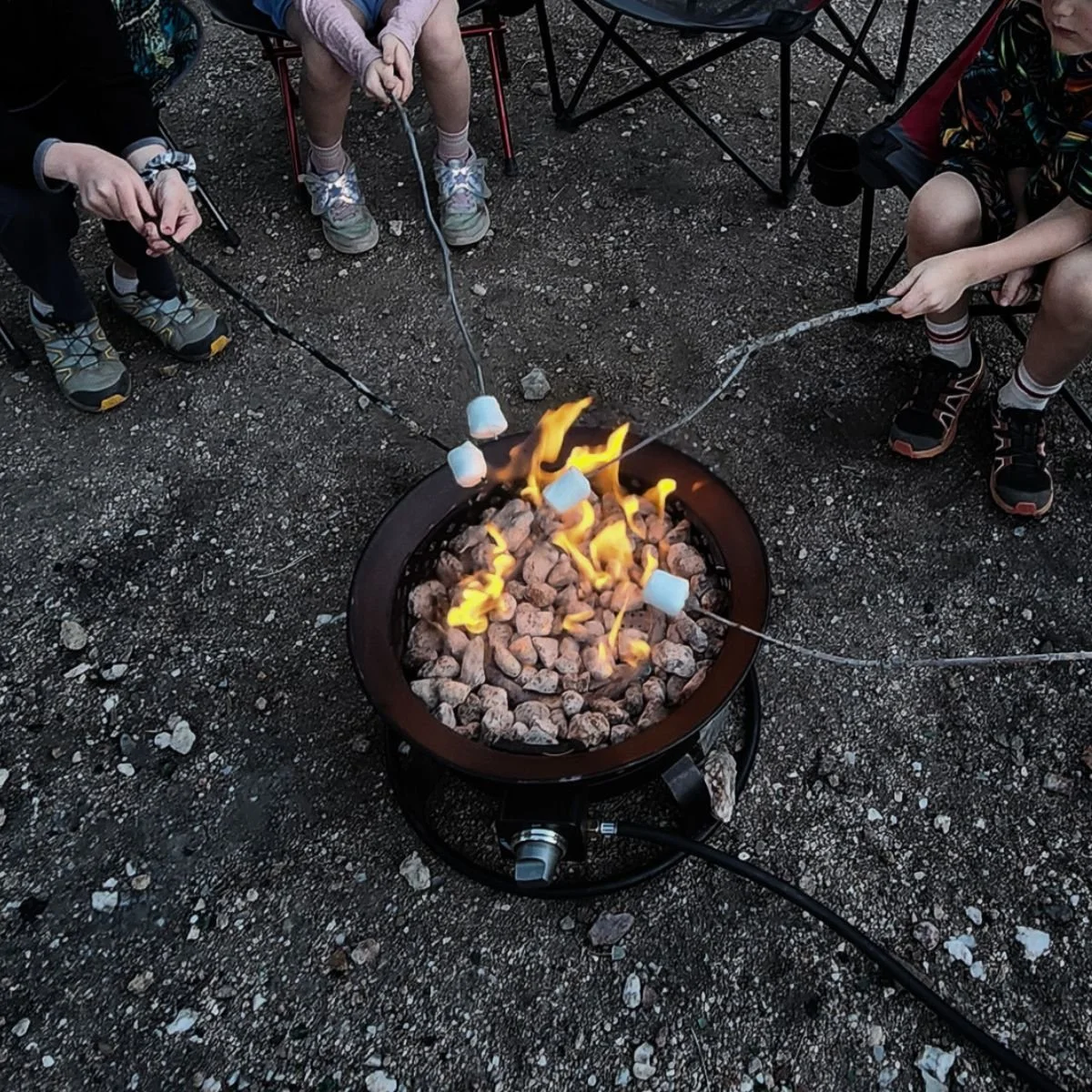
Here's the good news: a propane fire is allowed under Stage I and Stage II restrictions across all of the above agencies. Propane fires are allowed because they can be turned off instantly and they don’t create any sparks.
Every Titus Adventures rental vehicle includes a kitchen setup with propane stove, pots, pans, and a French press. You can cook a full meal and boil water for coffee at 6 a.m., if you want.
For campers who still want to roast marshmallows and have the gathering around a fire experience, we offer a propane fire pit as a rental add-on or you can rent just the propane firepit. True, it's not a woodburning campfire but when the sun goes down and the stars come out the flames are warm and captivating.
How to Use A Propane Fire Pits
Setup is easy and the control of propane gives you peace of mind to enjoy your fire. Here is a quick video showing how to properly setup and turn on your fire:
@titusadventureco Have you camped with a propane fire pit? They're a simple and safe way to enjoy a campfire even during a fire ban. Always check local guidelines first to confirm. Add a propane fire pit to your next adventure rental at tacrentals.com 🔥
♬ original sound - Titus Adventure Company
We Believe in the Power of Outdoor Adventure
Fire bans are not the end of the campfire experience. They're a request to adapt, to be the kind of camper who knows the rules, respects them, and keeps coming back because those places are still there next year.
The real campfire experience was never just about the wood. It was about the shared experience. The distance from everything that usually fills your days.
Propane burns clean. The stars still show up. The stories still come out.
Ready to Go?
The magic of a campfire was never really about the wood. It's about what happens to people when the screens go dark and the flames come up. We've seen it on a hundred trips.. strangers becoming friends, families making memories and couples remembering why they love each other.
That's what we're in the business of.
And we're not going to let a fire ban get in the way of it.
Browse our Campervans, SUVs and 4x4 Trucks, or reach out at info@tacrentals.com and we'll help you plan the whole thing.
Resources
Colorado
Fire restrictions in Colorado are managed by a patchwork of agencies, including county sheriffs, the Division of Fire Prevention and Control (DFPC), U.S. Forest Service, Bureau of Land Management, and National Park Service. This means restrictions can vary dramatically from one trailhead to the next.
The Colorado Division of Fire Prevention and Control maintains the state's primary fire restriction resource and is your best first stop. Their page includes:
A statewide interactive map with links to county and federal land agency restrictions
The DFPC Wildfire Information Dashboard with real-time incident and fire environment updates
A weekly Fire Environment Brief
Important: Information on fire restrictions can change rapidly. If you're heading into National Forest land (which covers millions of acres of the Colorado backcountry), restrictions are managed independently by each forest: Arapaho-Roosevelt, White River, Grand Mesa-Uncompahgre-Gunnison, Pike-San Isabel, San Juan, Medicine Bow-Routt, and Rio Grande National Forests operate on different restriction levels.
BLM lands in Colorado are similarly divided by field offices. The DFPC page links directly to restriction pages for each relevant BLM field office..
The simplest answer for Colorado camping in 2026: assume there is a restriction in effect and bring a propane firepit.
Nevada
For those heading out from our Las Vegas location in Henderson, your go-to resource for Nevada fire restrictions is nevadafireinfo.org
This site is run by the interagency Nevada fire information network and is the most comprehensive single source for current restriction status across state, federal, and local lands in Nevada.
Know Before You Go
Every state in the American Southwest where our vehicles often roam has active fire restriction resources. These are your first stops:
Utah: utah-fire-info-utahdnr.hub.arcgis.com/pages/active-fire-restrictions
Arizona: wildlandfire.az.gov/fire-restrictions anddffm.az.gov/fire-restrictions
California: readyforwildfire.org/prevent-wildfire/fire-restrictions
All other states and BLM lands nationally: InciWeb tracks active incidents, and BLM's national fire restrictions page links to regional restriction information by state.
Fire restriction information changes rapidly. Always verify current restrictions through official state and federal sources before your trip. Links in this post are updated as of June 2026.